
Things to Do in Muscat in April
April weather, activities, events & insider tips
Low Season · Budget Friendly
April Weather in Muscat
Long-run averages for April
94°F (34°C)
High Temp
76°F (24°C)
Low Temp
0.4 inches (10 mm)
Rainfall
37%
Humidity
10
Sunny-Day UV
⚠ Heat exhaustion and dehydration are genuine risks in April. for visitors arriving from cooler climates who are not yet acclimatised. The combination of 34°C (94°F) temperatures and low 37% humidity causes rapid fluid loss. Easy to miss. Sweat evaporates instantly. Drink water continuously, not just when thirsty. Avoid prolonged sun exposure between 11am and 3pm. Pack electrolytes. Seek shade often.
⚠ Occasional shamal wind events can blow fine sand and dust from the interior. Visibility drops. Everything outdoors gets coated in gritty film. These are more common from May onward but can occur in late April. If you wear contact lenses, bring glasses as a backup for dusty days. Protect your gear. Rinse often.
Making the most of April in Muscat? Browse tours and activities in Muscat on GetYourGuide.
Is April Right for You?
Weigh the advantages and considerations before booking
Advantages
- + April's 37% humidity is among the lowest you'll encounter in Muscat all year. That dry air makes the 34°C (94°F) highs feel surprisingly manageable compared to August's swampy 60% humidity. Mornings before 10am are pleasant for walking the Mutrah Corniche or exploring Old Muscat. The warmth carries the salt-mineral smell of the Gulf of Oman. Skip the heavy dampness of summer monsoon months.
- + The Daymaniyat Islands nature reserve stays open through April before closing for turtle nesting season in June. Water temperatures in the Gulf of Oman currently sit around 26-28°C (79-82°F), warm enough to snorkel comfortably without a wetsuit. Visibility tends to be excellent this time of year, often exceeding 15 metres (49 feet). The islands are quieter than they were in February or March.
- + This is the tail end of Muscat's cooler season. Hotel rates have already dropped noticeably from the December-February peak. You'll find better availability and more negotiating room, midweek. You sacrifice nothing. All major attractions and experiences from high season remain open.
- + The Jebel Akhdar rose harvest happens in late April through May. Damask roses bloom across the mountain villages at 2,000 metres (6,560 feet) elevation. The air up there smells like a perfume distillery. It is one of Oman's most distinctive seasonal moments. Highland temperatures sit around 20°C (68°F). Pack a jacket. It feels like a different country from the coast.
Considerations
- − By mid-April, afternoon temperatures regularly hit 34°C (94°F). The sun is intense enough to make any outdoor activity between 11am and 3pm unpleasant. This is the month where Muscat starts transitioning into its brutal summer. You can feel the heat building day by day. Plan around it. Otherwise you will spend your afternoons wilting.
- − Muscat's nightlife is limited year-round. April does not change that. Alcohol is only served in licensed hotel venues, most of which close by midnight or 1am. If you are expecting a Mediterranean-style bar scene or late-night street culture, Muscat is the wrong city. April offers no seasonal exception to that reality.
- − The dry air at 37% humidity is deceptive. You will dehydrate faster than you expect because sweat evaporates almost instantly. The thirst signal lags behind the actual fluid loss. Headaches and fatigue hit visitors hard on their second or third day. Drink water aggressively from arrival. Do not wait until you feel thirsty.
Settled on April? Compare hotel prices in Muscat for your dates on Trip.com.
Best Activities in April
Top things to do during your visit
April is a turning point in Muscat's year. The cooler winter months have ended. Daytime temperatures climb into the mid-thirties Celsius, hot enough to make shade feel like a luxury but not yet the punishing extremes of a Gulf summer. Rainfall is negligible, barely ten millimetres across the entire month, so the sky stays clear and pale blue from dawn until a sunset that stains the Al Hajar Mountains burnt sienna. Mornings arrive warm, hovering around twenty-four degrees even before sunrise. By midday the limestone facades of Muttrah's waterfront shimmer with radiated heat. The air is notably dry compared to the humid months that follow. April's relative aridity means sweat evaporates quickly, making outdoor excursions into the interior surprisingly tolerable if you start early. This is the last comfortable window for full-day desert and mountain trips before the May heat shuts down casual exploration. Muscat in April rewards travelers who sync their days to the sun. Early risers own the city between six and nine in the morning, when the corniche smells of salt water and roasting Arabic coffee from waterfront cafés, and the fish market at Muttrah reverberates with auctioneers calling out the morning's catch of kingfish and hammour. By afternoon the souqs thin out. Shops pull their metal shutters halfway down, and the city enters a languid pause. This is when hotel pools and air-conditioned museum galleries come into their own. Evenings bring the second wave. Families spill onto beaches near Qurum after four o'clock, the scent of grilled lamb and saffron rice drifts from neighbourhood restaurants, and the Royal Opera House district fills with strolling couples under amber streetlights. Friday remains the communal day off, when Muscat's parks and coastal walkways are at their liveliest, and the fish market is shuttered. Plan cultural outings and souq visits for Saturday through Thursday instead. For travelers asking whether Muscat is safe, it consistently ranks among the most secure capitals in the region. Violent crime is rare. Petty theft is uncommon, and the local culture of hospitality means solo travelers and families alike move freely through the city and its surroundings. Nightlife in Muscat skews toward hotel lounges, shisha terraces overlooking the Gulf of Oman, and late-night shawarma joints along the Ruwi high street rather than club districts. It is relaxed, convivial, and winding down by midnight. Where to eat spans an enormous range, from the lamb shuwa slow-cooked underground at traditional Omani restaurants to the pan-Asian and Lebanese kitchens concentrated around the Shatti al-Qurum strip. Muscat's beaches, Qurum, Yiti, and the more secluded coves east toward Qantab, are warm enough for swimming year-round, but April's water temperature feels inviting, cool enough to refresh without the bathwater sensation of late summer.

Private Tour to Wadi Bani Khalid & Wahiba Sand Desert with Sunset
private_tourThe drive south from Muscat peels away the capital's white-marble polish and drops you into a landscape that feels ancient in a physical, geological sense. Crumbling sandstone plateaus give way to the rolling amber dunes of Wahiba Sands, where the silence is so complete you can hear individual grains of sand skitter in the wind. Wadi Bani Khalid is the counterpoint, a permanent freshwater canyon where turquoise pools sit between smooth, water-polished rock walls, and the cool mist rising off small waterfalls hits your skin like a drink of water after hours in the desert. The tour ends at a dune camp as the sun drops, turning the sand from gold to rust to violet, while your guide brews cardamom-scented Omani coffee over a charcoal burner.
Experiencing both the liquid green of a desert oasis and the silence of open dunes in a single day compresses Oman's geographic extremes into one memorable contrast.
Insider tip: Bring a dry bag for your phone and camera at Wadi Bani Khalid. The pools are deep enough for swimming, and the spray from the lower falls reaches the walkway where most visitors stand to photograph.
This month: April's daytime heat in the desert interior exceeds what you will feel on the Muscat coast. Temperatures at Wahiba Sands regularly push past forty degrees Celsius by early afternoon, making the morning wadi swim and late-afternoon dune arrival essential rather than optional.

Private Full-Day Wadi Shab Adventure and Bimmah Sinkhole Tour
day_tripWadi Shab is the hike that separates casual sightseers from travelers willing to get wet for something extraordinary. The trail begins with a short boat crossing of the wadi's mouth, where boatmen ferry you across jade-coloured water in fibreglass dinghies, then follows a narrow canyon upstream past date palms and oleander bushes, the air thick with the herbal sweetness of wild mint growing in the crevices. The final reward requires swimming through a series of chest-deep pools inside a narrowing limestone gorge to reach a hidden waterfall that thunders into a cathedral-sized cave. The roar echoes off the walls and the spray is cold enough to raise goosebumps despite the desert heat outside. Before or after, the Bimmah Sinkhole delivers a different geological spectacle, a near-perfect oval of blue-green water sunk into a limestone shelf above the coast, its rim encrusted with salt crystals that crunch underfoot.
The swim through Wadi Shab's gorge to its hidden waterfall is one of the few physical adventures in the Gulf region, demanding just enough effort that the payoff feels earned.
Insider tip: Wear quick-drying shoes with grip rather than sandals. The rocks in the upper wadi are slick with algae, and the swim sections are easier if you are not worrying about losing footwear. Leave valuables in the vehicle. There is nowhere dry to store them past the second pool.
This month: Water levels in Wadi Shab are typically lower in April than during the winter rain months, which means the swimming sections are calmer and easier to navigate. But the final waterfall runs at reduced volume compared to January or February.

Private Historical Tour - Nizwa Fort - Nizwa Souq - Bahla Fort - Jabreen Castle
culturalThis tour is an architecture lesson delivered through four centuries of Omani power politics, and every stop smells different. Nizwa Fort's massive circular tower, the largest in the Arabian Peninsula, radiates stored heat from its honey-coloured stone, and the interior passageways are engineered with murder holes, false doors, and date-syrup traps designed to scald invaders. Step outside into Nizwa Souq and the air changes. Woodsmoke from frankincense burners mixes with the peppery tang of dried limes and the earthy sweetness of halwa being stirred in copper pots. Bahla Fort, a UNESCO site sprawled across a hilltop, feels rougher and older, its mud-brick walls crumbling at the edges in a way that makes the restoration visible. Jabreen Castle is the refined counterpart, a seventeenth-century palace where painted wooden ceilings in deep indigo and ochre depict geometric patterns so precise they look stencilled, and the thick walls keep the interior cool enough that you feel the temperature drop the moment you cross the threshold.
Four distinct fortifications in a single day trace Oman's history from defensive warfare through courtly sophistication, and no other country on the peninsula preserves this architectural range in such close proximity.
Insider tip: The Friday livestock market at Nizwa Souq is one of Oman's great spectacles. Goats and cattle are traded in a dusty ring while buyers feel the animals' teeth and flanks. But it only runs on Friday mornings. If your tour falls on another day, the silver and copper souq sections are still worth lingering in, the shops selling traditional khanjar daggers.

Mountains & Fortresses, Private Day Tour to Nizwa & Jebel Akhdar
guided_experienceJebel Akhdar, the Green Mountain, earns its name even in April, when terraced rose gardens and pomegranate orchards cling to its upper slopes in defiance of the arid lowlands below. The drive from Muscat climbs through wadis of grey and rust-coloured rock, the air cooling noticeably with each switchback, until you reach villages at around two thousand metres where the temperature can be ten to fifteen degrees cooler than the coast. The scent of Damask roses, harvested here for rosewater production, hangs over the terrace paths in the early morning. From the canyon rim at Diana's Point, the view drops a thousand metres straight down into a gorge scored with striations of pink and cream limestone. The sheer verticality makes your stomach lurch. Nizwa's fort and souq, visited on the return leg, bring you back to ground level and the smell of roasting frankincense.
Jebel Akhdar delivers the only alpine-feeling escape within day-trip range of Muscat, and the temperature relief alone justifies the drive in April's heat.
Insider tip: The road up Jebel Akhdar requires a four-wheel-drive vehicle, which your tour provides. But if you are considering a self-drive visit on another day, rental agencies in Muscat enforce the 4WD rule at the police checkpoint and will not let sedans pass.
This month: April falls within the tail end of the Jebel Akhdar rose harvest season, which typically runs from March into late April depending on the year. If your visit coincides with active harvesting, you will see villagers collecting petals in the early morning and distilling rosewater in copper pots, a scene that disappears entirely by May.

Nizwa Heritage & Jebel Shams Canyon, Private Tour from Muscat
adventureJebel Shams is Oman's highest peak, and its signature attraction is not the summit but the canyon it cleaves open. Wadi Ghul, often called Oman's Grand Canyon, is where the ground falls away into a chasm over a thousand metres deep, its layered walls banded in cream, ochre, and charcoal like a geological cross-section. The Balcony Walk trail follows a narrow path carved into the cliff face, passing the ruins of an abandoned village where stone houses cling to a ledge so exposed that the wind hums through their empty doorframes. The sound of your own footsteps on loose gravel is magnified by the canyon acoustics, and the dry, mineral smell of sun-baked rock is cut only by the occasional wild thyme bush growing from a crack. On the return route, Nizwa provides the human-scale counterpoint. The fort's rooftop platform has a panoramic view across the date-palm oasis below, and the souq's alleyways are narrow enough that the frankincense smoke lingers at nose level.
The Balcony Walk at Jebel Shams is the most dramatic cliff-edge trail in the Arabian Peninsula, and the vertigo-inducing drop into Wadi Ghul is not something a photograph can replicate.
Insider tip: Bring a windbreaker even in April. The rim of Jebel Shams sits at nearly three thousand metres, and the canyon updraft creates a persistent breeze that feels cold against sun-heated skin. The trail is exposed with no shade, so a hat and high-SPF sunscreen are non-negotiable.

Nizwa Fort-Nizwa Souq-Birkat Al Mouz-Jebel Akhdar - Private Full Day Tour
day_tripThis itinerary adds Birkat Al Mouz to the Nizwa and Jebel Akhdar combination, and the addition matters. Birkat Al Mouz is a partially abandoned village at the foot of the mountain road, where a centuries-old falaj, one of Oman's UNESCO-listed irrigation channels, still threads through date-palm groves and taro fields, the sound of running water constant and cool against the dry heat. Walking through the old quarter, past crumbling mudbrick houses with carved wooden doors hanging open, you smell damp earth and overripe dates fermenting on the ground beneath the palms. The contrast with the manicured terraces of Jebel Akhdar above is striking. Down here, agriculture is ancient and gravity-fed. Up there, it is the same system but clinging to a mountainside, producing roses and walnuts instead of dates. Nizwa Fort and its souq anchor the day with the familiar sensory combination of cool stone interiors, the metallic ring of coppersmith hammers, and the sticky-sweet smell of halwa ladled from communal pots.
Birkat Al Mouz's falaj irrigation system is a working museum of Omani water engineering, and seeing it in person makes the entire mountain ecosystem above it legible in a way that skipping straight to Jebel Akhdar does not.
Insider tip: At Birkat Al Mouz, follow the falaj channel upstream past the obvious ruin and into the active palm grove behind it. Most tour groups stop at the photogenic crumbling facades. But the functioning agricultural terraces five minutes further are where you see the water system doing its actual work, with farmers tending crops in knee-deep greenery.
This month: April's dry conditions mean the falaj at Birkat Al Mouz runs lower than during the winter recharge months. But the system remains active year-round. The reduced flow simply makes the engineering more visible, as you can see the stone channel beds and diversion gates that are submerged after heavier rains.
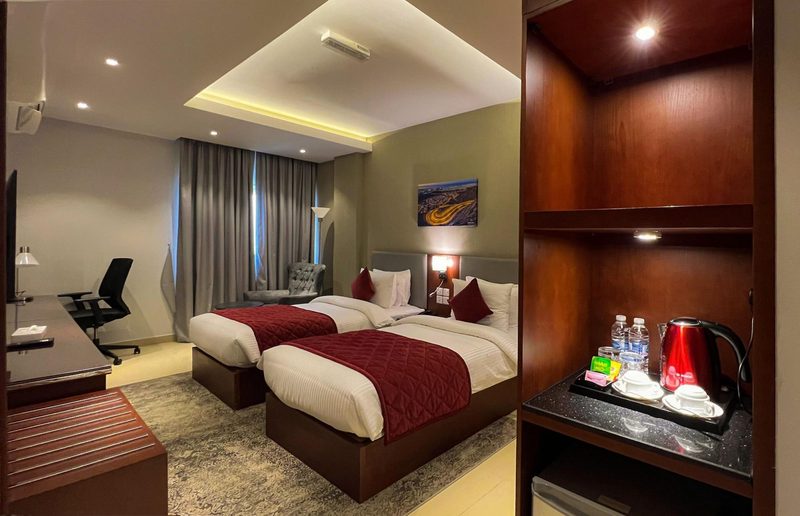
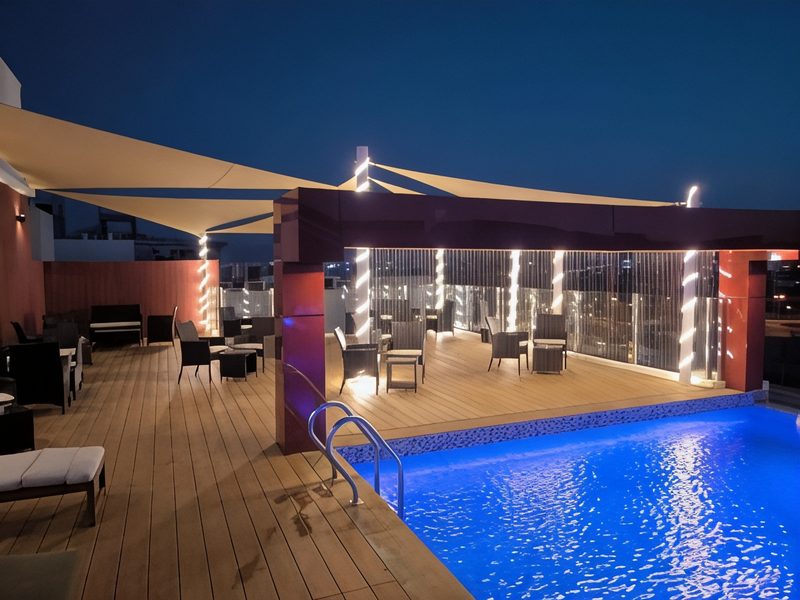
Where to Stay in Muscat in April
Hand-picked hotels across price tiers for April travellers.
Packing Checklist
Bookmark this page — your progress is saved between visits
Need the full list with shopping links?
Climate-specific gear, brand recommendations, and what to leave at home.
View Muscat Packing List →Essential Tips
Insider knowledge and common pitfalls to avoid
Insider Knowledge
Muscat is one of the safest cities in the Middle East. This is not marketing language. Petty crime is rare. Solo travellers walk the Mutrah Corniche at midnight without concern. Omanis have a hospitality culture. Locals sometimes go out of their way to help a lost visitor. The biggest personal safety risk in April is the heat. Not the people.
The dry 37% humidity is the sneakiest thing about April in Muscat. You will not feel yourself sweating. It evaporates the instant it leaves your skin. By the time you notice thirst you are already a litre behind on hydration. Locals carry water bottles everywhere. They sip constantly. Follow their example from day one. Not day three when the headache starts.
Friday is Oman's day of rest. The rhythm of the city changes completely. Most shops and businesses close Friday morning until after the midday prayer, usually reopening around 4pm. The Mutrah Souq keeps limited Friday hours. Plan your cultural visits and shopping for Saturday through Thursday. Use Friday morning for beach time, hotel pools, or the Nizwa livestock market, which specifically operates on Fridays. Adapt your schedule.
The Mutrah Corniche after sunset is where Muscat socialises. Families walk. Fishermen sell the day's catch from coolers on the pavement. The frankincense smoke drifting from the souq entrance mixes with grilled corn from the waterfront carts. The temperature drops to around 28°C (82°F) by 8pm. The sea breeze makes it the most comfortable hour of the day. This is when Muscat stops feeling like a city you are visiting. It starts feeling like a place you could live.
Avoid These Mistakes
Scheduling outdoor activities during the midday hours is a mistake. April's 34°C (94°F) high hits between 11am and 3pm. The exposed terrain around wadis, forts, and desert camps offers almost no shade. Locals structure their entire day around avoiding this window. They retreat indoors for lunch and rest. Your itinerary should do the same. Early mornings for hikes and outdoor sites. Midday for air-conditioned museums or souq shopping. Late afternoon for the beach or a dhow cruise. Work with the heat.
Underestimating how spread out Muscat is will cost you. The city stretches along roughly 50 km (31 miles) of coastline with no metro system. Attractions are scattered across distinct neighbourhoods separated by rocky headlands. Walking between the Sultan Qaboos Grand Mosque and Mutrah Souq is technically possible. It takes over an hour in the heat. It is miserable in April. Rent a car. Arrange a driver for the day. Use ride-hailing apps. Do not assume you can walk this city the way you might walk Lisbon or Barcelona.
Wearing shorts and sleeveless tops to mosques, forts, and government buildings will backfire. Oman enforces a modest dress code at cultural sites. The Sultan Qaboos Grand Mosque will turn you away at the entrance if your knees or shoulders are exposed. Women must cover their hair inside the mosque. This catches visitors off guard. The hotel and beach areas are relaxed about dress. Step into any heritage site and the standard changes completely. Pack those long sleeves.
Short on time? See day trips around Muscat on GetYourGuide.
Ready to plan your trip to Muscat?
Now that you've got the research covered, here's where to go next.
Explore More Activities in Muscat
Didn't see anything interesting yet?
Browse Viator's full catalog of tours, day trips, food experiences, and private guides in Muscat.
See All Muscat Tours on Viator