
Things to Do in Muscat in December
December weather, activities, events & insider tips
High Season · Book Early
December Weather in Muscat
Long-run averages for December
79°F (26°C)
High Temp
64°F (17°C)
Low Temp
0.4 inches (10 mm)
Rainfall
54%
Humidity
3
Rainy Days
5
Sunny-Day UV
⚠ Brief rain showers hit roughly three days in December and can make unpaved wadi access roads temporarily impassable. Confirm road conditions with your tour operator or the Royal Oman Police road-status service before committing to a wadi day trip. Flash floods are rare. They happen. Plan ahead.
⚠ Morning fog occasionally settles on Jebel Akhdar's upper switchbacks, reducing visibility on the steep mountain road to near zero. If you are driving yourself up the mountain, wait until after 9am for it to lift rather than pushing through. Patience pays off. The views reward.
Making the most of December in Muscat? Browse tours and activities in Muscat on GetYourGuide.
Is December Right for You?
Weigh the advantages and considerations before booking
Advantages
- + December's average high of 26°C (79°F) turns Muscat's outdoors from a survival exercise into genuine pleasure. After six months of summer heat that pins the mercury above 35°C (95°F), the city finally exhales. Locals flood the corniche, the wadis, and the mountain roads. Their numbers tell you everything. Omanis know this weather window is precious.
- + Calm seas on the Gulf of Oman open up the Daymaniyat Islands nature reserve. The reserve closes entirely from May through October for turtle nesting. Water temperatures around 25°C (77°F) and visibility stretching to 15 meters (49 feet) make December one of the most reliable months for snorkeling and diving off Muscat's coast.
- + Wadi pools and desert campsites hit their sweet spot. The wadis southeast of Muscat still hold water from autumn rains. Overnight desert temperatures drop to roughly 12°C (54°F). This is comfortable. Summer camping is miserable. The furnace heat makes it so.
- + The cooler evenings bring Muscat's cultural calendar to life. The Royal Opera House programs its strongest winter-season performances. Muttrah Souq fills with evening shoppers lingering over frankincense and silverwork. They no longer rush through in air-conditioned desperation. The scent of grilled corn and sizzling kebabs from the corniche carts reaches you. In summer, heat dissolves it.
Considerations
- − December marks the start of peak tourist season. It shows in pricing. Accommodation, guided tours, and desert camp stays all command their highest rates of the year. Popular day trips to Wadi Shab and the Sharqiya Sands fill up weeks ahead. Waiting until you arrive to book is a gamble. It rarely pays off.
- − Sunset drops before 6pm. This shaves roughly two hours of usable daylight compared to summer. For photography and outdoor activities, this compresses your effective day. This matters on wadi treks and mountain drives. You want the golden afternoon light. You also need to be off unfamiliar roads before dark.
- − Jebel Akhdar and the interior mountain villages sit at 2,000 meters (6,560 feet). Temperatures can plunge near freezing after sunset. That is a swing of 25°C (45°F) from coastal Muscat. Visitors get caught off guard. Pack for both. Mild coast and cold mountain in the same suitcase requires planning.
Settled on December? Compare hotel prices in Muscat for your dates on Trip.com.
Best Activities in December
Top things to do during your visit
December strips away the furnace heat that defines Muscat for most of the year, replacing it with dry, clear days that settle around 26 degrees Celsius and nights that dip to a cool 17. The change is not subtle. After months when the city's white-washed facades radiated heat well past sunset, December air carries a lightness that locals greet by reclaiming the outdoors: families spread blankets along the corniche at Qurum, fishermen linger longer at the Mutrah fish market, and the terraces of the old quarter fill with the cardamom-laced steam of kahwa poured from long-spouted dallah pots. Rainfall is negligible, barely ten millimetres across the whole month, so the sky over Muscat stays an unbroken ceramic blue from the Hajar Mountains to the sea. This is the season when Muscat's geography opens up. The interior wadis, parched to bare stone under summer temperatures that can exceed 39 degrees, hold their turquoise pools at swimmable levels. The Wahiba Sands cool enough for overnight camps without air conditioning. And the mountain plateaux of Jebel Akhdar and Jebel Shams, which offer only marginal relief in July, become brisk, with mornings cold enough to see your breath above the terraced rose gardens. For anyone arriving from a Northern Hemisphere winter, Muscat in December delivers a disorienting inversion: warm sun on your arms by day, a light jacket after dark, and none of the oppressive humidity that climbs above sixty percent in the summer months. The city functions on a different clock now, its energy shifting from air-conditioned interiors back to the waterfront, the souqs, and the mountain roads that radiate outward from the capital like spokes. Muscat also reveals its culinary identity more easily in December, when the Mutrah Souq's narrow lanes no longer trap heat like an oven. The scent of burning frankincense, luban, the resin that bankrolled Oman's ancient trading empire, threads through every covered passage, mixing with the syrupy sweetness of halwa cooling in copper pots. Restaurants along the coast serve shuwa, lamb slow-roasted underground in banana leaves, its meat falling apart with a smoky, faintly sweet depth. The beaches at Qurum and Yiti, too hot to touch barefoot in June, become places where the sand is warm rather than scalding, and the water holds a clarity that makes the reef shadows visible from shore. Muscat is safe, walkable, and hospitable, and December is the month when all of that converges without the compromise of extreme heat.

Private Tour to Wadi Bani Khalid & Wahiba Sand Desert with Sunset
private_tourThe drive south from Muscat dissolves urban Oman in under an hour, trading polished highways for gravel tracks that wind into Wadi Bani Khalid, where freshwater pools glow an almost artificial emerald beneath limestone walls draped in wild fig roots. The Private Tour to Wadi Bani Khalid and Wahiba Sand Desert with Sunset pairs that canyon swim with an afternoon crossing into the Sharqiyah Sands, where the dunes shift from pale gold to deep copper as the sun drops. You ride into a Bedouin camp as the light goes horizontal, the silence broken only by the creak of cooling sand and the low rumble of a camel settling onto its knees.
Two of Oman's most dramatic landscapes compressed into a single day, ending with a desert sunset that turns the dunes the color of wet terracotta.
Insider tip: Swim the wadi pools in the morning before the sand tour begins, because by mid-afternoon the canyon fills with echo and the lower pools get crowded. Bring reef shoes, as the submerged rocks are slick with algae.
This month: December temperatures in the Wahiba Sands drop to the mid-teens at night, making an overnight desert camp comfortable without climate control, a sharp contrast to the summer months when sand surface temperatures can be painful underfoot even after dark.

Private Full-Day Wadi Shab Adventure and Bimmah Sinkhole Tour
day_tripWadi Shab announces itself with a boat crossing so brief it feels ceremonial: a fibreglass skiff putters across the mouth of the canyon, deposits you on a boulder-strewn bank, and then the walk begins, threading along a narrow trail cut into the cliff face above water so clear you can count the pebbles three metres down. The Private Full-Day Wadi Shab Adventure and Bimmah Sinkhole Tour pushes deeper than most visitors go, past the main swimming pools to the cave where a waterfall curtain pours through a gap in the rock, the sound amplified into a low roar by the enclosed stone. On the return, the tour stops at Bimmah Sinkhole, a collapsed limestone dome filled with aquamarine water that smells faintly of mineral salts and is warm enough to linger in without a wetsuit.
Wadi Shab's final hidden waterfall cave, reachable only by swimming through a narrow rock passage, is one of the most extraordinary natural spaces on the Arabian Peninsula.
Insider tip: Wear a dry bag across your chest for the swim into the cave, because the passage requires you to be fully submerged for a short stretch, and anything not waterproofed will be soaked. Bring a headlamp if you want to see the cave ceiling properly.
This month: December water levels in Wadi Shab are typically stable and the pools full enough for the swim-through to the waterfall cave, which can be impassable after rare heavy rains in winter months.

Private Historical Tour - Nizwa Fort - Nizwa Souq - Bahla Fort - Jabreen Castle
culturalThe road from Muscat to Nizwa crosses the Hajar range through a pass where the air cools noticeably and the rock shifts from coastal beige to a dark, iron-stained grey. The Private Historical Tour covering Nizwa Fort, Nizwa Souq, Bahla Fort, and Jabreen Castle lays out five centuries of Omani dynastic history in a single arc. Nizwa Fort's massive drum tower, built in the 1650s, is a study in military engineering: you climb through false doors, murder holes, and date-syrup traps designed to scald invaders, emerging onto a rooftop where the wind carries the faint sweetness of roasting coffee from the souq below. Bahla Fort, an enormous earthen structure ringed by a twelve-kilometre wall, has a rawness that Nizwa's restored stonework lacks, crumbling ochre ramparts that smell of dry clay and sun.
Four of Oman's most significant fortifications in one day, each built in a different century and for a different purpose, from Nizwa's brute military geometry to Jabreen Castle's painted ceilings and scholarly ambitions.
Insider tip: At Nizwa Souq, walk past the tourist silver shops to the livestock auction hall at the back, held on Friday mornings. Even on other days, the halwa vendors near the fort entrance sell fresh Omani halwa still warm from the pot, its rosewater-and-saffron scent unmistakable.

Mountains & Fortresses, Private Day Tour to Nizwa & Jebel Akhdar
guided_experienceJebel Akhdar, the Green Mountain, earns its name from the terraced farms that cling to its upper slopes, where damask roses, pomegranates, and walnuts grow at altitudes above 2,000 metres in soil that seems far too thin to support them. The Mountains and Fortresses Private Day Tour to Nizwa and Jebel Akhdar pairs the fort town's lowland heat with the plateau's sharp coolness, a temperature swing that can reach ten degrees within an hour of driving. The final stretch requires a four-wheel-drive vehicle on switchback roads carved into cliff faces, and the reward at the top is a silence so complete you can hear individual bee wings in the rose terraces, the stone villages below reduced to specks of white against brown rock.
The altitude contrast between Nizwa's palm-lined plain and Jebel Akhdar's cool rose terraces, reached in a single morning, is one of the most dramatic landscape transitions in the Gulf.
Insider tip: Ask your driver to stop at the Diana's Point viewpoint on the plateau rim, where the canyon drops nearly a thousand metres straight down. The morning light, when the shadow line creeps across the gorge floor, is more dramatic than the midday view.
This month: December mornings on the Jebel Akhdar plateau can drop close to freezing, so bring a proper jacket. The cold is a genuine surprise after the coastal warmth of Muscat.

Nizwa Heritage & Jebel Shams Canyon, Private Tour from Muscat
adventureJebel Shams, Oman's highest peak at just over 3,000 metres, anchors the western Hajar range with a canyon so deep and sheer that it draws inevitable comparisons to the Grand Canyon, though its geology is entirely its own: layered limestone in bands of cream, rust, and charcoal, with no river at the bottom, only a dry wadi bed visible as a pale thread far below. The Nizwa Heritage and Jebel Shams Canyon Private Tour from Muscat pairs the canyon rim walk, a narrow balcony path that hugs the cliff face past abandoned stone villages, with the restored fortifications of Nizwa, grounding the natural spectacle in human history. The wind along the canyon rim carries a mineral sharpness, and the sound is pure exposure: nothing but air moving across open rock.
The Balcony Walk along Jebel Shams canyon is the most vertigo-inducing trail in Oman, threading past thousand-year-old abandoned settlements perched on ledges that seem to defy structural logic.
Insider tip: The Balcony Walk trail is unshaded and exposed. Start before the sun clears the eastern rim, and carry more water than you think you need, because the dry mountain air dehydrates faster than the coastal humidity you may have adjusted to in Muscat.
This month: December is one of the clearest months for visibility on Jebel Shams, with virtually no haze or dust. The canyon layers are sharply defined to the bottom.

Nizwa Fort-Nizwa Souq-Birkat Al Mouz-Jebel Akhdar - Private Full Day Tour
day_tripThis second route to Nizwa and Jebel Akhdar threads through Birkat Al Mouz, a village that most Muscat day-trippers drive past without realizing what they are missing. The Nizwa Fort, Nizwa Souq, Birkat Al Mouz, and Jebel Akhdar Private Full Day Tour stops at the village's abandoned settlement, a crumbling maze of mudbrick houses and falaj irrigation channels where water still runs through hand-cut stone aqueducts, the sound of it trickling through empty rooms one of the most hauntingly specific noises in Oman. From there the tour climbs to Jebel Akhdar's plateau before looping back down to Nizwa Fort and its adjacent souq, where the scent of frankincense and sandalwood is thick enough to taste at the back of your throat.
Birkat Al Mouz's abandoned falaj village, where irrigation water still flows through houses no one has lived in for decades, is a quietly extraordinary place that most tours skip entirely.
Insider tip: In the abandoned village at Birkat Al Mouz, follow the sound of running water to find the still-active falaj channels behind the main ruins. The contrast between the flowing water and the silent, roofless houses is the emotional core of the stop.
Where to Stay in Muscat in December
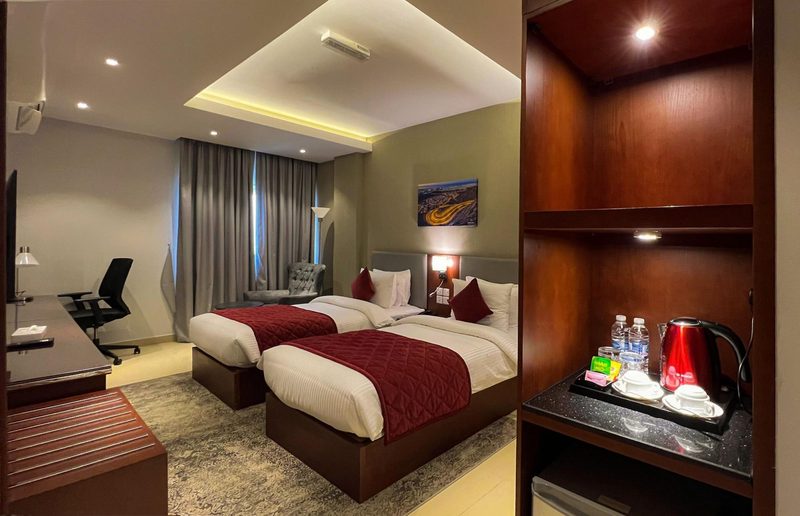
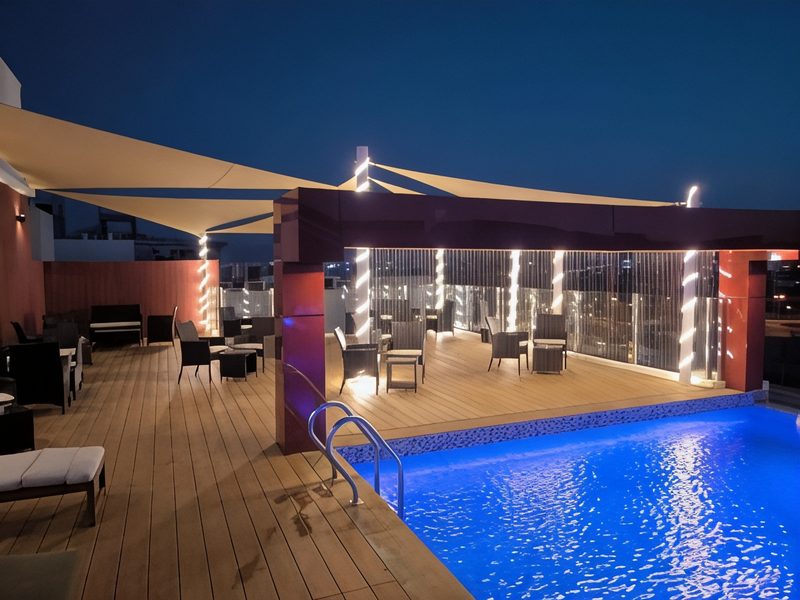
Hand-picked hotels across price tiers for December travellers.
Public Holidays in December
Dates that affect opening hours, transport and crowds
Isra' and Mi'raj
Observed nationwide as a public holiday. This date depends on observation rather than a fixed calendar, so confirm it locally closer to the time. Date not yet confirmed.
Isra' and Mi'raj
Observed nationwide as a public holiday. This date depends on observation rather than a fixed calendar, so confirm it locally closer to the time. Date not yet confirmed.
Packing Checklist
Bookmark this page — your progress is saved between visits
Need the full list with shopping links?
Climate-specific gear, brand recommendations, and what to leave at home.
View Muscat Packing List →Essential Tips
Insider knowledge and common pitfalls to avoid
Insider Knowledge
Friday is Oman's holy day. Most of Muscat closes Friday morning until after the noon prayer. Museums, malls, and government sites included. The one exception worth knowing: Nizwa's livestock auction happens only on Friday mornings, starting around 7am. Plan that drive specifically. Save city sightseeing for Saturday through Thursday.
Muscat is a driving city with essentially no useful public transport. December's peak-season traffic along Sultan Qaboos Street between Muttrah, Qurum, and Al Mouj can stall badly around 5pm. A rental car is not optional for day trips. Booking before you arrive saves a noticeable premium over the airport desks, which jack rates in peak season.
Omani hospitality means you will likely be offered kahwa, cardamom-spiked coffee poured from a brass dallah, and halwa, a dense sticky sweet made from rosewater, saffron, and ghee. This happens at almost any extended interaction, from a silversmith's workshop in Muttrah Souq to a Bedouin host in the Sharqiya Sands. Accept with your right hand. Declining without tasting is read as impolite. The halwa is better than you expect. Nothing like the Middle Eastern sweets you may know from home.
Al Mouj, the marina and waterfront development north of the airport still called The Wave by longtime residents, has become Muscat's evening social anchor. Restaurants and cafes open later than the rest of the city. The promenade fills with young Omanis and expats after dark. The beach access is public. It gives a very different impression of the city than the heritage souqs. December evenings at about 20°C (68°F) are its best season.
Avoid These Mistakes
Do not underestimate distances. Do not try to cram two major day trips into one day. Wadi Shab is a two-hour drive each way from Muscat. Nizwa is about ninety minutes. The Sharqiya Sands is three hours. The return legs on unlit desert highways after dark share the road with free-roaming camels. One major excursion per day, started early, is the pace that works.
Do not pack only for warm coastal weather. Muscat itself is comfortable in light layers. A night in the Sharqiya Sands or an afternoon on Jebel Akhdar at 2,000 m (6,560 ft) can drop 15°C (27°F) below the coast. The temperature swing between sea level and the mountain villages catches visitors every December. There is nowhere to buy warm gear along the mountain road. Pack layers.
Do not expect Dubai-style nightlife. Oman permits alcohol only in licensed hotel restaurants and bars. There are no standalone bars. No clubs. No liquor shops. Muscat's evenings revolve around long dinners, shisha lounges overlooking the harbor, and corniche walks. If that sounds limiting rather than peaceful, Muscat might not match what you are after in any month. Adjust expectations before arrival. It saves disappointment.
Short on time? See day trips around Muscat on GetYourGuide.
Ready to plan your trip to Muscat?
Now that you've got the research covered, here's where to go next.
Explore More Activities in Muscat
Didn't see anything interesting yet?
Browse Viator's full catalog of tours, day trips, food experiences, and private guides in Muscat.
See All Muscat Tours on Viator